
When most people think of cybersecurity, they imagine firewalls, encryption, and technical jargon. But for business owners or leaders, what matters most is: What will it cost me if I get breached—or if I invest properly?
Let’s shift the conversation from bits and bytes to real dollars and real risks.
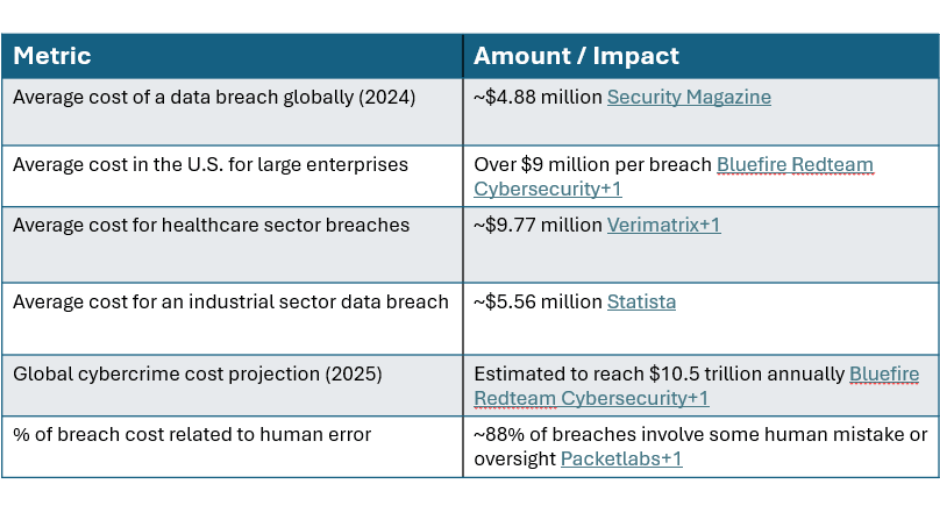
Key Security Statistics That Hit the Bottom Line
Here are some up-to-date stats that show how cybersecurity translates into financial impact:
What Drives These Costs?
Knowing the numbers is one thing; knowing why those numbers are so high helps you understand how to lower them.
- Detection and response time are critical factors in managing the impact of a security breach. The longer it takes to identify and contain a breach, the higher the costs can be, including lost revenue, reputational harm, and potential legal or regulatory fines.
- Certain industries, especially those that are highly regulated and handle substantial amounts of data, such as healthcare, often face more significant financial repercussions when breaches occur.
- Human-related issues, such as poor password practices, phishing, and social engineering, contribute significantly to the occurrence of breaches.
- Technology gaps also play a crucial role in increasing security risks. These can include using outdated software, having system misconfigurations, and implementing weak access controls.
Here are actionable ways to reduce risk and cost. Think return on investment (ROI), not just protection.
- Invest in prevention
Tools like MFA (multi-factor authentication), endpoint security, employee training may cost, but they cost far less than a breach. - Speed up detection & containment
Faster detection = fewer lost hours, less downtime, fewer legal/regulatory hits. - Plan for recovery
Backups, incident response plans, legal readiness, public relations prepping—all help reduce indirect costs. - Budget for insurance & compliance
Cyber insurance and legal/regulatory compliance may feel like overhead—but non-compliance fines or lawsuit costs often exceed those. - Measure risk in dollars
Quantify what a breach could cost your business (loss of sales, customer churn, brand damage, fines), and treat IT/security spend as risk management rather than just cost center.
Talking about cybersecurity in tech terms is useful, but when you turn those discussions into dollars, it’s easier to justify investment, prioritize what matters, and make decisions that protect both your business and your bottom line.
If you’re reviewing your budget this month, ask: What’s the potential cost of doing nothing? Then compare that to the cost of acting now.
Take Action with 360 Security Services
In a world where cybersecurity threats are ever-evolving, waiting to react can be a costly mistake. The real question isn’t whether you can afford to invest in protection, but whether you can afford not to. At 360 Security Services, we specialize in turning potential risks into manageable solutions before they impact your bottom line. Our team of experts is ready to help you evaluate your current security posture and implement strategies that make financial sense for your business. Don’t wait for a breach to force your hand. Reach out to us today and take proactive steps toward safeguarding your future. Your peace of mind, and your business, depend on it.