
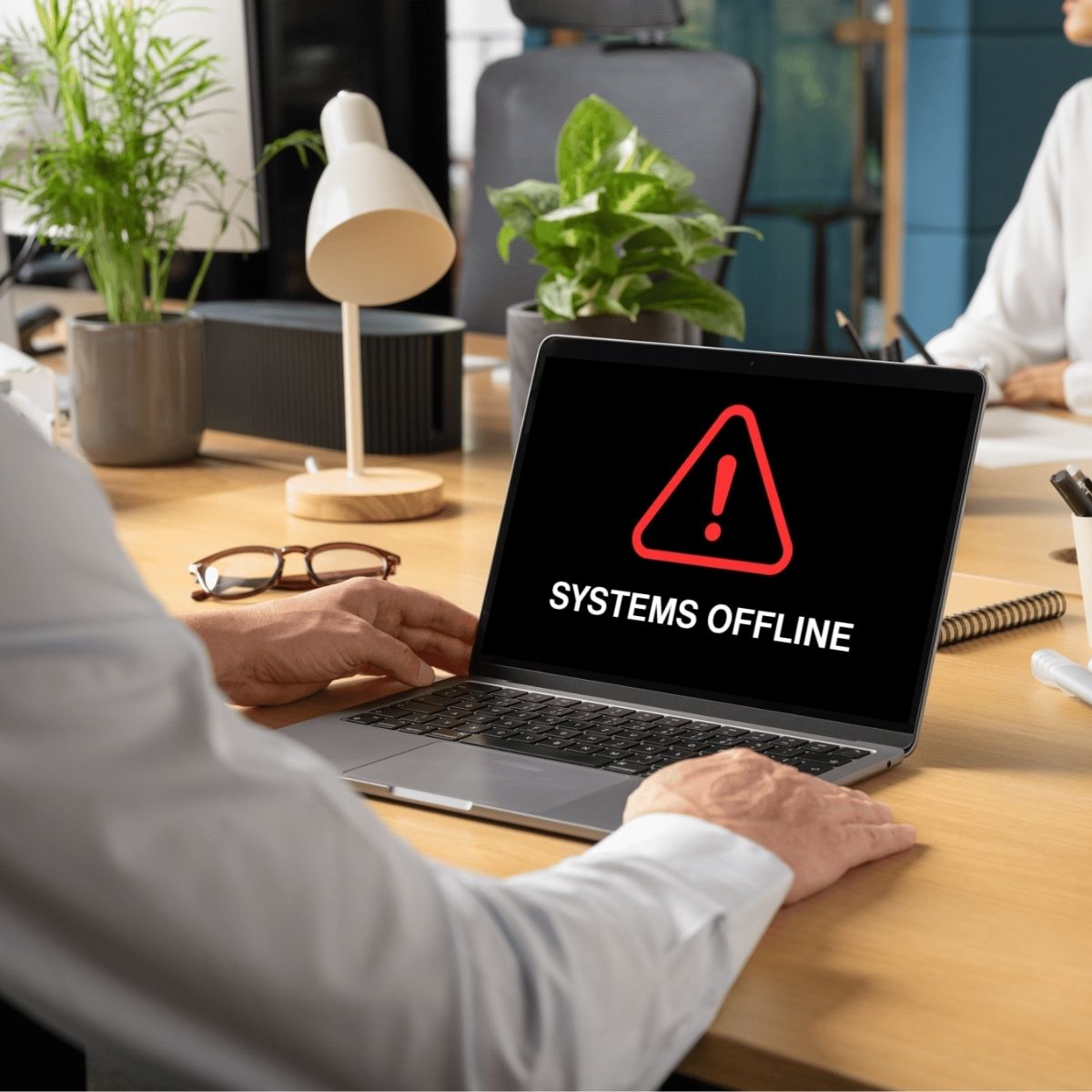
A cyberattack doesn’t have to steal sensitive information to bring business operations to a halt. Imagine arriving at work on a Monday morning to discover that employees can’t access critical systems. Customer records are unavailable. Internal communications are disrupted. Orders can’t be processed, and no one knows how long it will take to restore normal operations.
For many organizations, the immediate concern would be identifying what caused the disruption and getting systems back online. There’s another question, however, that deserves just as much attention: How does the business continue operating in the meantime?
As ransomware and other cyber threats continue to evolve, organizations need to think beyond protecting their networks. They need to understand how a cyber incident could affect their people, operations, customers, and ability to make decisions.
The Impact Goes Beyond IT
When people think about a cyberattack, they often picture stolen data, compromised passwords, or a demand for ransom. While those are serious concerns, the operational consequences can be equally damaging. Consider how dependent most businesses are on interconnected systems. A disruption to one critical platform can quickly affect multiple departments.
Operations: Employees may lose access to the systems, equipment, or information they need to perform their jobs.
Finance: Invoicing, payroll, vendor payments, and other financial processes may be delayed.
Customer service: Teams may be unable to access customer information, respond to requests, or provide accurate updates.
Communications: Email, messaging platforms, and internal networks may become unavailable or unreliable.
Leadership: Decision-makers may lack the information needed to assess the situation and determine next steps.
What begins as a technical incident can quickly become an organization-wide business disruption. The longer the disruption continues, the more difficult it can become to manage its financial, operational, and reputational consequences.
The First Challenge Isn’t Always Technical
When systems go down, IT and cybersecurity teams play a critical role in investigating the incident, containing the threat, and beginning recovery, but technical recovery is only one part of the response.
Leadership teams may simultaneously need to determine whether operations can continue, which services should take priority, how employees will communicate, and what information needs to be shared with customers or other stakeholders. These decisions become significantly more difficult when responsibilities haven’t been established in advance.
For example, how will employees receive instructions when email is unavailable? Is there an alernative process for managing critical business functions during a system outage? Who is responsible for coordinating with a third-party provider when their services are disrupted? Organizations that haven’t considered these questions may find themselves developing procedures in the middle of an already stressful situation. That’s why cybersecurity preparedness needs to extend beyond the IT department.
Business Continuity and Incident Response Work Together
An incident response plan and a business continuity plan serve different but complementary purposes. Incident response plans outline how an organization identifies, contains, investigates, and responds to a security incident. Whereas business continuity plans focus on how essential business functions can continue during a disruption, even when normal systems or processes are unavailable. Both are necessary.
An organization may have excellent technical procedures for responding to ransomware but still struggle to maintain operations while systems are being restored. Likewise, a business may have backup processes in place but lack a coordinated approach to containing an active cyber threat. Effective preparedness requires these plans to work together, with clear communication between IT, operations, leadership, and other critical functions.
Five Questions Every Organization Should Be Able to Answer
Preparing for a cyber-related disruption doesn’t mean predicting every possible scenario. It means understanding where the organization is most vulnerable and establishing a framework for responding when something goes wrong.
Here are five questions worth asking:
- Which systems are essential to daily operations?
Not every system carries the same level of operational importance. Identify the applications, data, vendors, and infrastructure your organization depends on most.
2. How long can those systems be unavailable before the impact becomes significant?
Understanding how quickly a disruption affects operations helps determine recovery priorities and where additional safeguards may be needed.
3. Who makes decisions during an incident?
Establish who has the authority to make operational, technical, financial, and communication decisions. Identify alternates in case key personnel are unavailable.
4. How will employees and stakeholders communicate if normal channels are disrupted?
Alternative communication methods should be established, documented, and accessible before an incident occurs.
5. Have response and recovery procedures actually been tested?
A plan that exists only on paper may not account for real-world complications. Tabletop exercises and other testing activities can help identify gaps, clarify responsibilities, and improve coordination.
These questions are relevant to organizations of all sizes, regardless of whether they manage cybersecurity internally or work with an outside provider.
Preparedness Is a Business Responsibility
Cybersecurity is often viewed primarily as a technology issue, but the consequences of a cyber incident rarely stay within the IT department. A disruption can affect employees, customers, vendors, financial operations, and an organization’s ability to deliver its services. That makes preparedness a shared responsibility. Business leaders don’t need to understand every technical aspect of a cyberattack. They do, however, need to understand the operational risks, know who is responsible for critical decisions, and have confidence that their organization can respond effectively.
At 360 Security Services, we believe effective risk management starts with understanding how threats can affect the entire organization. By connecting cybersecurity, operational planning, and organizational risk management, businesses can make more informed decisions before an incident occurs. The goal isn’t simply to get systems back online. It’s to make sure the business is prepared to navigate the disruption while recovery is underway. Is your organization prepared to answer these questions before a disruption occurs? Let’s talk.